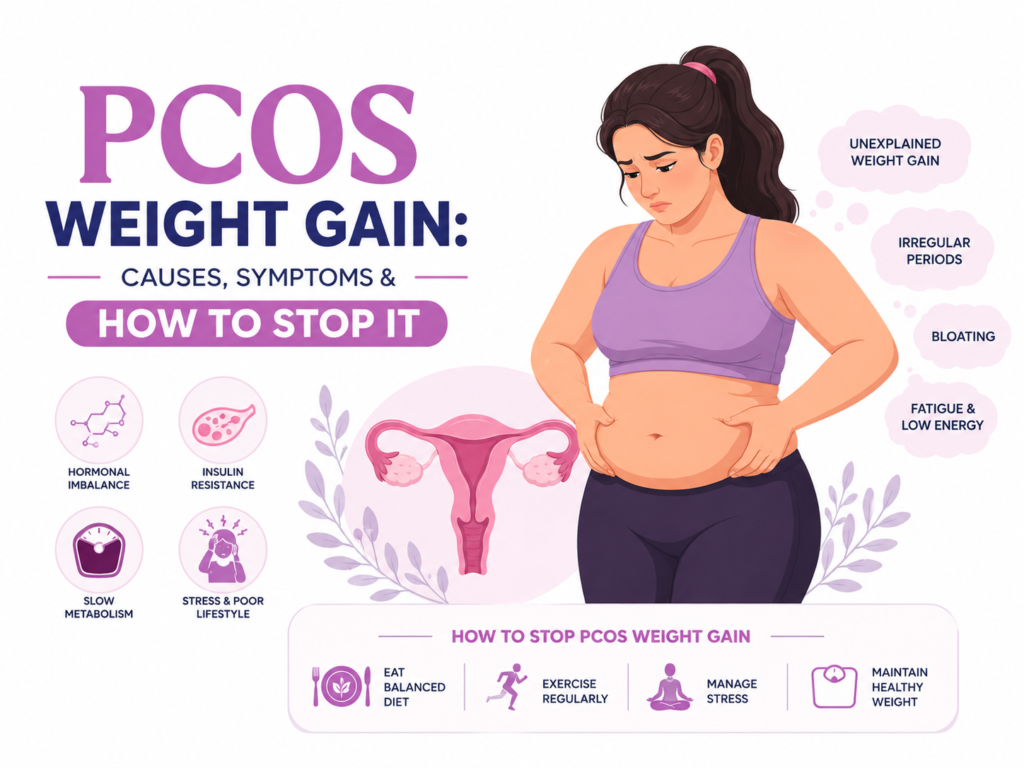

PCOS Weight Gain: Causes, Symptoms & How to Stop It

why does pcos cause weight gain

Weight changes can be frustrating, especially when they seem to happen without an apparent reason. Many women living with PCOS notice that their weight increases easily and is harder to reduce, even with careful eating and regular exercise. PCOS weight gain is a common concern, and understanding the science behind it helps make sense of what the body is going through.

PCOS, or Polycystic Ovary Syndrome, is a hormonal condition that affects ovulation, metabolism, and insulin regulation in the body. These changes influence how the body stores fat, uses energy, and responds to food. Because of this, weight gain related to PCOS is not simply about lifestyle; it is often deeply connected to hormones and metabolism.

Why Does PCOS Cause Weight Gain?

One of the main reasons PCOS causes weight gain is insulin resistance. In many women with PCOS, the body produces insulin but cannot use it efficiently. As a result, higher insulin levels encourage the body to store fat, particularly around the abdomen. This is why PCOS insulin resistance and weight gain are frequently seen and why many women notice increased belly fat.

Hormonal imbalance also plays a significant role. Higher androgen levels can slow metabolism, increase appetite in some individuals, and change the way fat is distributed in the body. This combination explains how PCOS causes weight gain and why losing weight may sometimes feel slower than expected.

Another factor is inflammation and metabolic slowdown, which may contribute to weight gain from PCOS over time. For some women, these changes appear gradually, while others may notice PCOS sudden weight gain or even PCOS rapid weight gain, especially when lifestyle stress, poor sleep, or dietary changes are involved. 

Primary Reasons Behind PCOS Weight Gain

Factor 

How it Contributes 

Insulin resistance 

Encourages fat storage and increases appetite

Hormonal imbalance

Slows metabolism and alters fat distribution

Increased androgens

Promotes abdominal fat accumulation

Chronic inflammation

Affects metabolic efficiency

Stress and sleep issues

Raise cortisol, which increases fat storage

These factors also explain why you gain weight with PCOS and why some women notice rapid weight gain.

Where Does PCOS Weight Gain Usually Appear?

Fat distribution in PCOS often follows a specific pattern. Many women notice abdominal weight gain in PCOS, particularly in the lower belly and waistline. This explains why PCOS and belly fat are among the most commonly reported concerns.

Typical PCOS weight gain areas include:

  • Lower abdomen and stomach
  • Waistline
  • Upper belly
  • Sometimes thighs or upper arms

This pattern is different from general weight gain and is closely linked to hormonal and metabolic changes rather than calorie intake alone.

Symptoms That May Occur Along With PCOS Weight Gain

In addition to PCOS weight gain, several other symptoms may appear due to hormonal imbalance:

  • Irregular or missed menstrual cycles
  • Acne or oily skin
  • Excess facial or body hair
  • Hair thinning
  • Fatigue or low energy
  • Mood changes
  • Difficulty losing weight

These symptoms often develop over time and may go unnoticed at first, especially in younger women.

Can You Have PCOS Without Weight Gain?

Not every woman with PCOS experiences weight gain. Some women have PCOS without weight gain, often referred to as lean PCOS. In such cases, ovulation problems, acne, or irregular cycles may still be present even though body weight remains normal.

So, does PCOS always cause weight gain? No. However, metabolic changes can still occur internally, which is why proper evaluation is essential even in women with a normal BMI.

How to Manage PCOS Weight Gain

Managing PCOS weight gain requires a combination of medical treatments as well as lifestyle modifications. The goal is not only weight reduction but also improving hormonal balance and insulin sensitivity.

Improving Diet and Nutrition

A balanced and nutritious diet helps regulate fat storage in the body and also maintains the optimum flow of blood sugar level throughout the body. High-fiber foods, lean proteins, and healthy fats support metabolism and hormone function. Reducing intake of refined sugar and processed foods can significantly improve insulin response and help control PCOS weight gain.

Regular Physical Activity

Regular exercise improves hormonal health and helps your body use insulin better. Activities such as walking, strength training, yoga, or swimming can help manage PCOS weight gain when done consistently.

Managing Stress and Sleep

Stress hormones can worsen insulin resistance and increase fat storage. Adequate sleep and relaxation practices play an essential role in stabilizing hormones and preventing further PCOS weight gain.

Medical Treatment Options

Most of the time, doctors may recommend PCOS weight gain treatment, such as medications that improve insulin sensitivity. Metformin is commonly used in selected cases as prescribed by the doctor, and hormonal therapy is used to regulate hormonal levels in the body. These decisions are always individualized based on symptoms and overall health.

While there is no universal cure for PCOS weight gain, proper treatment and lifestyle changes can significantly improve symptoms and help maintain a healthy weight.

When Should You Seek Medical Advice?

Unexplained weight gain, irregular periods, acne, or excessive hair growth should not be ignored. Early diagnosis helps prevent complications such as diabetes, infertility, and metabolic syndrome.

Women experiencing symptoms of PCOS or persistent PCOS weight gain should consider consulting a specialist for proper evaluation and treatment.

Expert Care for PCOS and Hormonal Health – Dr. Aparna Gumma

With extensive experience in women’s health, Dr. Aparna Gumma provides comprehensive evaluation and personalized treatment for PCOS and hormonal disorders. Her aim is to focus on identifying the root cause, correcting hormonal imbalance, and guiding patients with realistic lifestyle and medical solutions.

Women dealing with PCOS weight gain often benefit from a structured treatment plan that combines medical care with practical lifestyle guidance.

Book your appointment today. 

FAQs -

No. Some women have PCOS without weight gain, although hormonal symptoms may still be present.

Hormonal imbalance and PCOS insulin resistance weight gain are the main reasons behind PCOS, which causes weight gain.

The best egg freezing age is between 30 and 35 years, though freezing earlier can improve success rates.

It often appears as abdominal weight gain and increased fat around the waist and stomach.

Diet, exercise, stress management, and medical therapy, when needed, form the most effective PCOS weight gain treatment.

Yes, some women experience PCOS rapid weight gain, especially when insulin resistance is severe.

About Dr Aparna

Dr Aparna Devi Gumma, female gynaecologist in Dubai, is one of the most trusted partners in women’s health with over 28 years of expertise as an Ob-Gyn and Advanced Gynecologic Laparoscopic Surgeon.

Related Blogs

why does pcos cause weight gain

PCOS Weight Gain: Causes, Symptoms & How to Stop It

PCOS Weight Gain: Causes, Symptoms & How to Stop It Weight changes can be frustrating, especially when they seem to happen without an apparent reason. Many women living with PCOS notice that their weight increases easily and is harder to reduce, even with careful eating and regular exercise. PCOS weight

Read More »
hormonal imbalance symptoms

Hormonal Imbalance: Symptoms, Causes & Treatment

Hormonal Imbalance: Symptoms, Causes & Treatment Do you feel like something isn’t quite right with your body or emotions lately? One day you’re exhausted despite a full night’s sleep; the next, your mood swings like a pendulum, or your skin breaks out unexpectedly. If this sounds familiar, you aren’t alone.

Read More »
signs of postpartum depression

How to Deal With Postpartum Depression: Symptoms, Causes & Treatment

How to Deal With Postpartum Depression: Symptoms, Causes & Treatment Postpartum depression is a widespread and serious mental health condition that may affect women following childbirth. While welcoming a baby is often associated with joy, it can also bring emotional, physical, and hormonal changes that feel overwhelming. Understanding what postpartum

Read More »

Book An Appointment