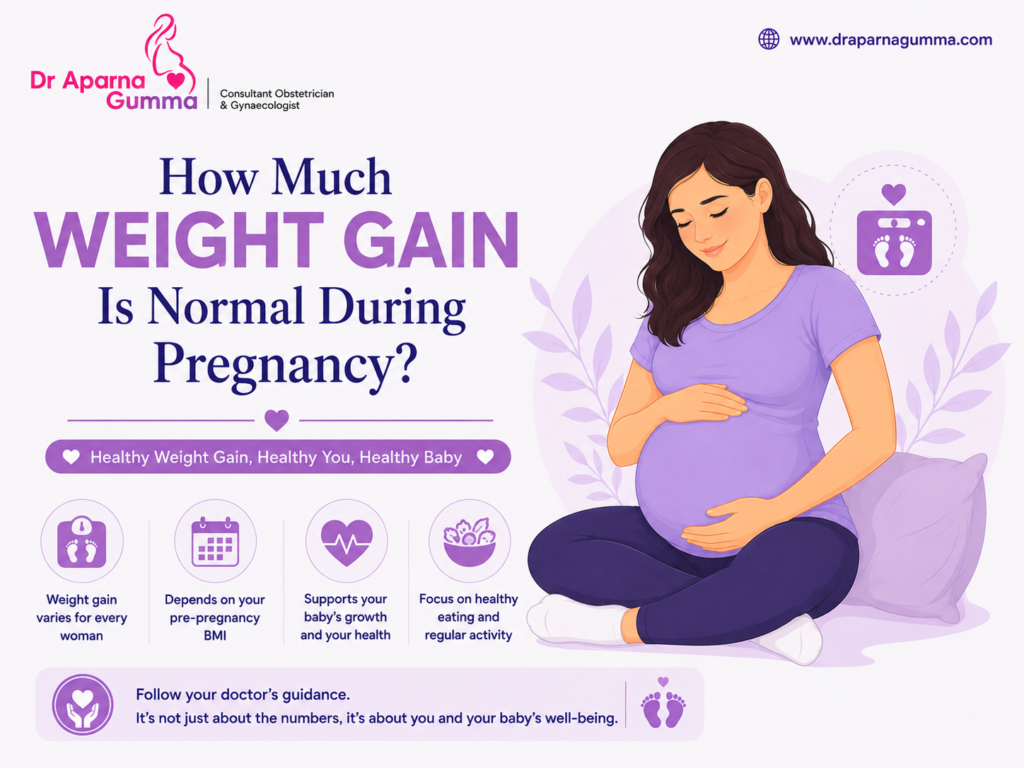

How Much Weight Gain Is Normal During Pregnancy?

How Much Weight Gain Is Normal During Pregnancy

Pregnancy brings countless changes to the body, and one of the most common concerns many expectant mothers discuss during antenatal appointments is weight gain. It is completely natural to wonder whether the number on the scale is increasing too quickly, too slowly, or exactly as it should.

Understanding how much weight gain is normal during pregnancy is important because it offers valuable insight into both maternal health and your baby’s growth and development. 

No two pregnancies are exactly alike, but healthy and steady weight gain is something that benefits every one of them, supporting your baby’s organs, the placenta, amniotic fluid, and the many changes your body makes to keep the pregnancy going. 

At Dr Aparna Gumma’s practice, many patients seek reassurance about pregnancy weight gain, particularly when comparing themselves to friends, online advice, or generalised information. The truth is that healthy weight gain depends on several individual factors, including your pre-pregnancy body mass index (BMI), whether you are carrying one baby or multiples, and how your pregnancy progresses.

This guide explains healthy pregnancy weight gain, what is considered normal by trimester, and when it may be worth discussing concerns with your obstetrician.

Why does weight gain happen during pregnancy?

Weight gain during pregnancy is not simply “putting on extra weight.” It reflects the body’s remarkable adaptations to support foetal growth.

By the end of a singleton pregnancy, weight gain usually includes:

  • Baby’s weight
  • Placenta
  • Amniotic fluid
  • Increased blood volume
  • Breast tissue growth
  • Enlargement of the uterus
  • Additional fluid retention
  • Fat stores that help prepare for breastfeeding

According to global maternity health data, most women carrying a single baby gain between 11.5 and 16 kg if they begin pregnancy at a healthy BMI. Research also suggests that both insufficient and excessive weight gain may increase certain pregnancy-related risks.

How much weight gain is normal during pregnancy based on BMI?

The recommended weight gain during pregnancy is usually guided by your pre-pregnancy BMI.

Recommended total weight gain for a singleton pregnancy

Pre-Pregnancy BMI

BMI Category

Recommended Total Weight Gain

Below 18.5

Underweight

12.5–18 kg

18.5–24.9

Healthy weight

11.5–16 kg

25–29.9

Overweight

7–11.5 kg

30 or above

Obesity

5–9 kg

These recommendations are based on internationally accepted obstetric guidelines and help clinicians monitor healthy maternal and foetal development. 

This is why there is no single answer to how much weight gain is normal during pregnancy for every woman.

What is normal weight gain in pregnancy by trimester?

One of the most frequently asked questions is about weight gain in pregnancy by trimester, as weight changes are not evenly distributed across all nine months.

First trimester (0–13 Weeks)

During the first trimester, many women gain very little weight.

Typical gain: 0.5–2 kg

This is because:

  • The baby is still very small
  • Morning sickness may reduce appetite
  • Hormonal fluctuations can affect digestion

Nausea and vomiting can sometimes cause a small, temporary dip in weight for some women and mild fluctuations like this in the early stages are often completely normal. 

Second trimester (14–27 Weeks)

This is when weight gain typically becomes steadier.

Typical gain: 0.4–0.5 kg per week

By this stage:

  • Appetite often improves
  • The baby grows rapidly
  • Blood volume expands
  • The uterus enlarges significantly

This phase often reflects the most consistent healthy pregnancy weight gain.

Third trimester (28–40 Weeks)

Weight gain continues, though the rate may vary.

Typical gain: 0.4–0.5 kg per week

This is when:

  • The baby gains most of their body fat
  • Fluid retention may increase
  • Breast tissue prepares for lactation

Some women notice slower gain toward the final weeks, which can still be normal.

Is weight gain different in twin or multiple pregnancies?

Yes. Carrying twins or multiples naturally requires greater nutritional support.

Recommended weight gain for a twin pregnancy

Pre-Pregnancy BMI

Recommended Weight Gain

Healthy weight

17–25 kg

Overweight

14–23 kg

Obesity

11–19 kg

Twin pregnancies often involve earlier and slightly faster weight gain, particularly in the second trimester.

If you are carrying multiples, your obstetrician will monitor your progress closely to ensure appropriate growth.

What happens if you gain too much weight?

Excessive pregnancy weight gain does not necessarily mean something is wrong, but it may increase certain risks.

Potential concerns include:

  • Gestational diabetes
  • High blood pressure
  • Pre-eclampsia
  • Larger birth weight baby
  • Increased likelihood of caesarean delivery
  • Greater postpartum weight retention

Any sudden, rapid weight gain, especially when paired with swelling, headaches, or visual disturbances, should never be left unchecked and always be assessed as soon as possible. 

What if you are not gaining enough weight during pregnancy?

Insufficient recommended weight gain during pregnancy can sometimes affect foetal growth.

Possible causes include:

  • Severe nausea and vomiting
  • Poor nutritional intake
  • Underlying digestive issues
  • Increased metabolic demands
  • Psychological stress affecting appetite

Low weight gain may increase the risk of:

  • Low birth weight
  • Preterm birth
  • Restricted foetal growth

Regular antenatal monitoring helps identify concerns early.

Maintain a healthy pregnancy weight gain

Healthy weight gain is not about “eating for two.” It is about eating wisely.

Practical ways to support healthy weight gain

Focus on nutrient-dense meals
Choose whole grains, lean proteins, fruits, vegetables, dairy, nuts, and healthy fats.

Eat small, regular meals

This can help manage nausea and maintain steady energy.

Stay active
Moderate activity like walking or prenatal yoga can really support a healthy metabolism during pregnancy unless, of course, your doctor has advised otherwise. 

Monitor, don’t obsess
Weight naturally fluctuates. Trends over time matter more than single measurements.

Attend regular antenatal appointments
Your doctor can track whether your healthy pregnancy weight gain is appropriate for your stage.

At Dr Aparna Gumma’s clinic, personalised guidance helps patients understand what is healthy for their unique pregnancy journey.

When should you speak to your doctor?

You should seek medical advice if you notice:

  • No weight gain after the first trimester
  • Sudden unexplained weight gain
  • Significant loss of appetite
  • Persistent vomiting
  • Rapid swelling
  • Concerns about the baby’s growth

Sometimes, reassurance is all that is needed. At other times, early intervention can improve outcomes.

Understanding healthy pregnancy weight gain

Understanding how much weight gain is normal during pregnancy can ease anxiety and help you focus on what truly matters, supporting a healthy pregnancy for both mother and baby.

Remember, pregnancy weight gain is not about achieving a perfect number on the scale. It is about ensuring your body has what it needs to nurture your growing baby safely.

If you have concerns about weight gain in pregnancy by trimester, your nutritional needs, or whether your progress is on track, discussing these concerns with Dr Aparna Gumma can provide personalised reassurance and evidence-based guidance for a healthier pregnancy journey.

Book your appointment today. 

FAQs -

For most women who begin pregnancy at a healthy weight, gaining around 11.5 to 16 kg is considered normal. However, this can vary depending on your pre-pregnancy BMI, overall health, and whether you are expecting one baby or multiples.


Yes, this is very common. Many women gain little or no weight during the first few months, especially if they are dealing with morning sickness, food aversions, or nausea.


Yes, implantation cramps often feel very similar to mild period cramps. They are usually light, short-lived, and may sometimes occur with slight spotting as the fertilised egg attaches to the uterine lining.

Intentional weight loss is usually not recommended during pregnancy, as your body needs enough nutrients to support your baby’s growth. If weight changes are a concern, it is always best to discuss them with your obstetrician.

Not necessarily. The shape and size of your bump can depend on many factors, including your body type, muscle tone, baby’s position, and amniotic fluid levels, not just how much weight you have gained.

During routine antenatal visits, your weight will usually be checked to make sure your pregnancy is on track. Regular monitoring gives your doctor the chance to spot any unexpected changes and offer the right guidance along the way. 

Not always. Some women find that things feel a little different the second time around, simply because the body has already been through pregnancy before. But each pregnancy is its own experience, and weight gain patterns can vary from one to the next. 

Gentle, pregnancy-safe exercise can help support healthy weight gain and improve overall well-being. Activities such as walking, swimming, or prenatal yoga are often helpful when approved by your doctor.

About Dr Aparna

Dr Aparna Devi Gumma, female gynaecologist in Dubai, is one of the most trusted partners in women’s health with over 28 years of expertise as an Ob-Gyn and Advanced Gynecologic Laparoscopic Surgeon.

Related Blogs

pregnancy weight gain

How Much Weight Gain Is Normal During Pregnancy?

How Much Weight Gain Is Normal During Pregnancy? Pregnancy brings countless changes to the body, and one of the most common concerns many expectant mothers discuss during antenatal appointments is weight gain. It is completely natural to wonder whether the number on the scale is increasing too quickly, too slowly,

Read More »
is cramping normal during early pregnancy

Are Cramps Normal in Early Pregnancy?

Are Cramps Normal in Early Pregnancy? For many women, the first few weeks of pregnancy bring a mixture of excitement, uncertainty, and plenty of physical changes. One of the most common concerns during this time is cramping. It can feel unsettling, particularly because early pregnancy cramps can feel very similar

Read More »
Treatment for PCOS

Can PCOS Be Cured Permanently?

Can PCOS Be Cured Permanently? Polycystic Ovary Syndrome is a common hormone-related condition that affects many women during their reproductive years. If you’ve just been diagnosed, you might be wondering: Can PCOS be cured permanently? The short answer is no, there isn’t a permanent cure for PCOS right now. But
Read More »
How to manage stress and anxiety during pregnancy

How to manage stress and anxiety during pregnancy?

How to manage stress and anxiety during pregnancy? Pregnancy is often described as a joyful journey, but for many women, it also brings emotional challenges that are difficult to ignore.  Understanding what causes anxiety during pregnancy is essential, as these feelings are more common than many expect. Hormonal changes, physical

Read More »

Start your journey to postpartum wellness

Book An Appointment