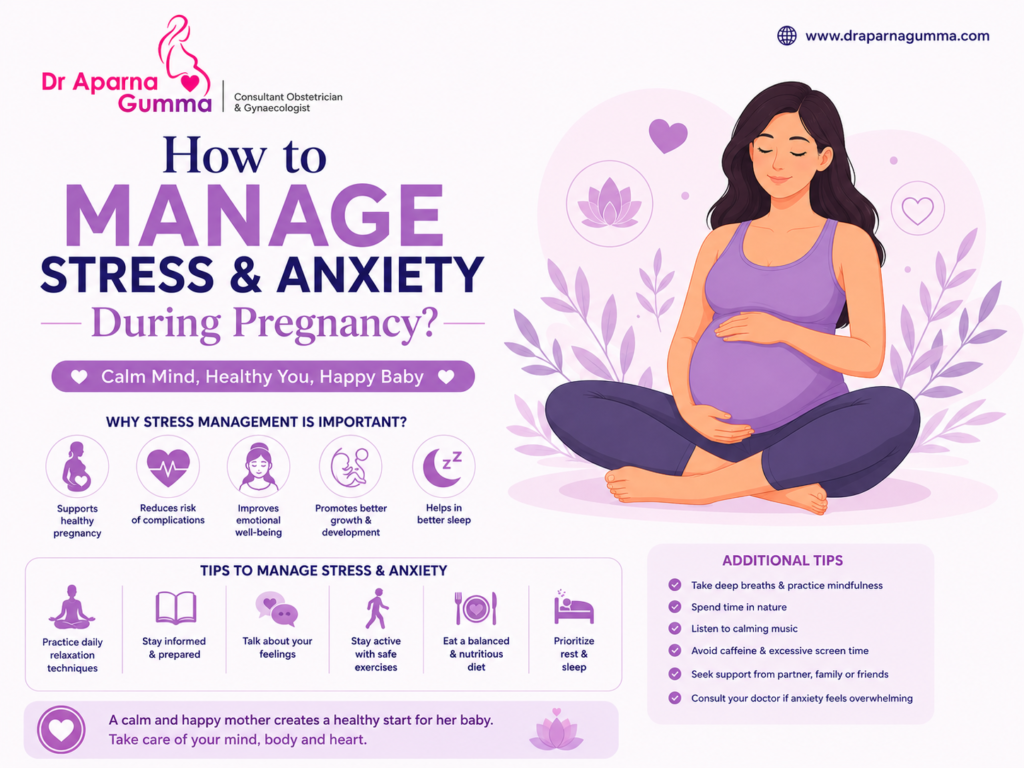

How to manage stress and anxiety during pregnancy?

How to manage stress and anxiety during pregnancy

Pregnancy is often described as a joyful journey, but for many women, it also brings emotional challenges that are difficult to ignore. 

Understanding what causes anxiety during pregnancy is essential, as these feelings are more common than many expect. Hormonal changes, physical discomfort, and the anticipation of motherhood can all contribute to heightened stress levels.

For patients under the care of Dr Aparna Gumma in Dubai, recognising causes of anxiety during pregnancy is the first step towards managing it effectively. With the right support and practical strategies, most women can navigate this phase with confidence and emotional stability.

Causes of anxiety during pregnancy

Understanding anxiety during pregnancy helps patients address the issue early rather than dismissing it as “normal stress.” Anxiety during pregnancy is not just emotional; it can influence both maternal and fetal well-being if left unmanaged.

Common causes include:
  • Hormonal fluctuations: Rising levels of oestrogen and progesterone affect brain chemistry.
  • Fear of childbirth: Concerns about labour pain, complications, or delivery outcomes.
  • Health worries: Anxiety about the baby’s development or personal health.
  • Previous pregnancy experiences: Miscarriage, infertility, or complications can increase anxiety.
  • Lifestyle and social factors: Work pressure, financial concerns, or lack of support.


                                                                       Did you know?

Globally, studies suggest that up to 1 in 5 women experience anxiety symptoms during pregnancy, making it a significant but often under-recognised concern.


Recognising symptoms of pregnancy-related anxiety

Anxiety during pregnancy can present in both emotional and physical ways. Identifying these symptoms early allows for timely support.

Emotional symptoms:
  • Persistent worry or fear
  • Feeling overwhelmed
  • Irritability or mood swings
  • Difficulty concentrating

Physical symptoms:
  • Rapid heartbeat
  • Breathlessness
  • Muscle tension
  • Sleep disturbances

If these symptoms interfere with daily functioning, medical evaluation is advisable.

Diagnosis of pregnancy-related anxiety

Diagnosis is usually clinical and based on:

  • A detailed medical and psychological history
  • Screening questionnaires for anxiety levels
  • Discussion of lifestyle, sleep patterns, and emotional triggers

Doctors like Dr Aparna Gumma may also assess whether symptoms overlap with depression, as both conditions can coexist.

Practical ways to manage stress and anxiety safely

Supporting mental health during pregnancy often involves a combination of lifestyle adjustments, emotional support, and, when needed, medical care.

1. Establish a calming daily routine

A structured day can help reduce feelings of uncertainty, particularly when it includes restful sleep, nutritious food, and regular breaks to relax.

2. Gentle physical activity

Gentle exercises such as walking, prenatal yoga, or stretching improve mood by releasing endorphins and reducing cortisol levels.

3. Mindfulness and relaxation techniques
  • Deep breathing exercises
  • Meditation
  • Guided imagery

These methods are widely recognised in clinical practice for helping to reduce anxiety.

4. Open communication

Speaking openly with your partner, family, or healthcare provider can ease emotional burden. Support systems play a crucial role in mental well-being.

5. Limit exposure to stress triggers

Stepping away from excessive use of social media or distressing information can help prevent your mind from becoming overwhelmed.

Treatment options for moderate to severe anxiety

When symptoms are persistent or severe, support from a qualified and experienced doctor is required. 

Non-medical approaches:
  • Cognitive Behavioural Therapy (CBT): Helps identify and reframe negative thought patterns
  • Counselling: Provides emotional support and coping strategies

Medical options:
  • In some cases, medication may be considered, but only under strict medical supervision
  • Doctors carefully weigh the risks and benefits before prescribing

Potential risks if anxiety is left unmanaged

While occasional stress is normal, persistent anxiety may lead to:

  • Poor sleep and fatigue
  • Increased risk of preterm birth (in some cases)
  • Difficulty bonding with the baby
  • Postpartum mental health concerns

Addressing these concerns early can help minimise the future risks. 

How can anxiety during pregnancy affect both mother and baby?

It’s quite common for anxiety during pregnancy to be brushed off as something temporary. However, when stress lingers, it can affect both the mother’s health and the baby’s development. Recognising this early on can help women take their symptoms seriously and seek the support they need in time.

Effects on the persistence and anxiety persist for a longer duration, which can disturb a woman’s physical and emotional health in numerous ways:

  • Chronic fatigue: Constant worry can drain energy levels and affect daily functioning
  • Sleep disturbances: Difficulty falling or staying asleep can worsen overall health
  • Reduced appetite or overeating: Emotional imbalance may impact nutritional intake
  • Increased risk of antenatal depression: Anxiety and depression often overlap

Effects on the baby

While occasional stress is unlikely to cause harm, prolonged and unmanaged anxiety may have indirect effects:

  • Higher stress hormone levels: Elevated cortisol can influence the intrauterine environment
  • Risk of preterm birth (in some cases): Severe, untreated anxiety has been associated with early delivery
  • Low birth weight: Chronic stress may affect foetal growth in certain situations

It is important to note that these risks are typically linked to severe and persistent anxiety, not occasional emotional fluctuations.

Recovery and emotional well-being after managing anxiety

With appropriate care:

  • Most women experience improvement within weeks
  • Emotional resilience improves over time
  • Confidence in handling pregnancy and motherhood increases

Consistency in self-care and follow-up appointments is key to long-term well-being.

Simple tips for a calmer and healthier pregnancy

  • Prioritise rest and sleep hygiene
  • Maintain a balanced diet rich in nutrients
  • Attend regular antenatal check-ups
  • Try not to rely on self-diagnosis or advice from unreliable sources.
  • Consult your doctor early for support and guidance

Managing anxiety is an essential part of a healthy pregnancy

Understanding what causes anxiety during pregnancy empowers women to take proactive steps for emotional well-being. While anxiety can feel overwhelming, it is both manageable and treatable with the right guidance.

If you are experiencing persistent stress or emotional discomfort, consulting an experienced specialist like Dr Aparna Gumma can provide personalised care and reassurance. 

Book an appointment with Dr Aparna Gumma to understand what causes anxiety during pregnancy and get the right support.

FAQs -

Causes of anxiety, including pregnancy, include hormonal changes, fear of childbirth, health concerns, and personal or social stressors. Each woman’s experience can vary.

Feeling slightly anxious at times is normal, though persistent or stronger symptoms should be looked at by a healthcare professional.

If anxiety continues for a long time without support, it can sometimes begin to affect how the pregnancy progresses, which is why addressing it early can make a meaningful difference.

Small habits such as breathing exercises, mindfulness, light physical activity, and a consistent routine can go a long way in reducing anxiety naturally.

When anxiety doesn’t ease and starts impacting your routine or rest, getting guidance from a specialist can really help.

There are situations where medication might help, but it is always prescribed with care and expert guidance, after fully considering the possible risks and benefits.

Yes, therapies like CBT are highly effective in managing anxiety and are considered safe during pregnancy.

About Dr Aparna

Dr Aparna Devi Gumma, female gynaecologist in Dubai, is one of the most trusted partners in women’s health with over 28 years of expertise as an Ob-Gyn and Advanced Gynecologic Laparoscopic Surgeon.

Related Blogs

How to manage stress and anxiety during pregnancy

How to manage stress and anxiety during pregnancy?

How to manage stress and anxiety during pregnancy? Pregnancy is often described as a joyful journey, but for many women, it also brings emotional challenges that are difficult to ignore.  Understanding what causes anxiety during pregnancy is essential, as these feelings are more common than many expect. Hormonal changes, physical

Read More »
Safe exercise during pregnancy

Safe exercise during pregnancy: benefits, plan & safety tips

Safe exercise during pregnancy: benefits, plan & safety tips Pregnancy brings many physical and emotional changes, and it is natural to wonder what activities remain safe during this time. One of the most common concerns expectant mothers have is whether exercise is beneficial or risky. In reality, safe exercise during

Read More »
why does pcos cause weight gain

PCOS Weight Gain: Causes, Symptoms & How to Stop It

PCOS Weight Gain: Causes, Symptoms & How to Stop It Weight changes can be frustrating, especially when they seem to happen without an apparent reason. Many women living with PCOS notice that their weight increases easily and is harder to reduce, even with careful eating and regular exercise. PCOS weight

Read More »
hormonal imbalance symptoms

Hormonal Imbalance: Symptoms, Causes & Treatment

Hormonal Imbalance: Symptoms, Causes & Treatment Do you feel like something isn’t quite right with your body or emotions lately? One day you’re exhausted despite a full night’s sleep; the next, your mood swings like a pendulum, or your skin breaks out unexpectedly. If this sounds familiar, you aren’t alone.

Read More »

Book An Appointment