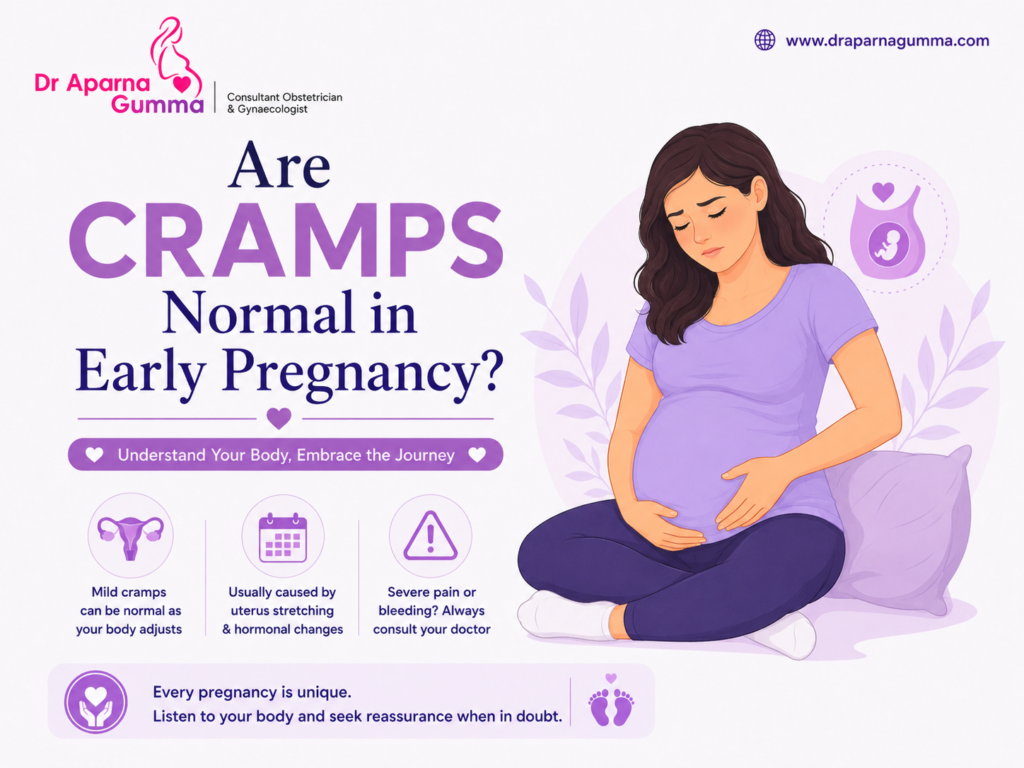

Are Cramps Normal in Early Pregnancy?
For many women, the first few weeks of pregnancy bring a mixture of excitement, uncertainty, and plenty of physical changes. One of the most common concerns during this time is cramping. It can feel unsettling, particularly because early pregnancy cramps can feel very similar to period pain. Naturally, this often raises concern: Are cramps normal in early pregnancy?
The reassuring answer is yes, in many cases, mild cramping during the first trimester is completely normal. When the body begins adjusting to support a growing pregnancy, it is perfectly normal for some of these natural changes to bring about mild discomfort or a bit of abdominal tightening here and there.
However, while is cramping normal during early pregnancy is a common question, understanding what is considered normal and when cramping may need medical attention is equally important.
This guide explains why pregnancy cramps in first trimester happen, what symptoms are expected, when to seek expert medical advice, and how to manage discomfort safely.
Are cramps normal in early pregnancy?
Yes, mild cramping is often a normal part of early pregnancy.
Studies suggest that nearly 20–30% of women experience some degree of abdominal discomfort or cramping during the first trimester, according to observations reported by major maternity health organisations, including the NHS. |
More often than not, these cramps come down to the body’s natural physiological changes, the uterus growing, and the hormonal shifts that come hand in hand with early pregnancy.
Typical normal cramping is usually:
- Mild to moderate
- Intermittent rather than constant
- Felt as a dull ache or pulling sensation
- Located low in the abdomen
- Not accompanied by heavy bleeding
When asking are cramps normal in early pregnancy?, it helps to understand that not all cramping signals a problem. In many cases, it simply reflects your body adapting to pregnancy.
Why do early pregnancy cramps happen?
Mild cramps during pregnancy are quite common, especially in the first 12 weeks, and are often caused by a number of perfectly normal changes happening in the body.
1. Implantation
Around 6–12 days after conception, the fertilised egg attaches to the uterine lining.
This process, known as implantation, may cause:
- Mild cramping
- Light spotting
- A pulling sensation
Implantation cramping is often one of the earliest signs of pregnancy.
2. Uterine Expansion
The uterus begins growing almost immediately after conception.
As it stretches to accommodate the developing embryo, you may notice:
- Gentle lower abdominal discomfort
- Tightness
- Mild pressure
This is one of the most common reasons behind pregnancy cramps in first trimester.
3. Hormonal Changes
Progesterone levels rise during pregnancy and bring with them a relaxing effect on muscles all over the body, including those in the digestive tract.
This can lead to:
- Bloating
- Constipation
- Gas pains
- Abdominal discomfort that feels like cramping
Many women mistake digestive discomfort for uterine cramps.
4. Increased Blood Flow
During early pregnancy, blood flow to the uterus increases significantly.
This can sometimes cause:
- A sensation of fullness
- Mild pelvic pressure
- Occasional cramping
What do normal early pregnancy cramps feel like?
One of the biggest concerns patients raise is distinguishing normal cramps from something more serious.
Here is a helpful comparison:
Normal Early Pregnancy Cramps | Concerning Cramps |
Mild, dull ache | Severe or sharp pain |
Comes and goes | Persistent or worsening pain |
Felt on both sides or centre | Localised to one side |
No heavy bleeding | Heavy bleeding or clots |
Improves with rest | Does not improve |
If you are wondering is cramping normal during early pregnancy, paying attention to the pattern and associated symptoms can offer useful clues.
When could cramping be a sign of a problem?
Although many cases are harmless, some situations require prompt medical evaluation.
Ectopic Pregnancy
An ectopic pregnancy is the pregnancy when the fertilised egg implants outside the uterus abnormally, usually in the fallopian tube.
It affects approximately 1–2% of pregnancies worldwide.
Symptoms may include:
- Sharp one-sided abdominal pain
- Shoulder tip pain
- Dizziness
- Vaginal bleeding
- Weakness or fainting
This is a medical emergency.
Miscarriage
Cramping accompanied by heavy bleeding may sometimes indicate miscarriage.
Symptoms may include:
- Strong abdominal cramps
- Lower back pain
- Passage of tissue
- Heavy bleeding
It is important to remember that mild cramping alone does not necessarily mean miscarriage.
Urinary Tract Infection (UTI)
Pregnancy increases the risk of UTIs, which can sometimes cause lower abdominal discomfort.
Look for:
- Burning while urinating
- Frequent urge to urinate
- Fever
- Cloudy urine
When should you contact a doctor?
You should seek medical advice if cramping is accompanied by:
- Heavy vaginal bleeding
- Severe abdominal pain
- Pain on one side
- Fever
- Chills
- Dizziness
- Fainting
- Shoulder pain
How are early pregnancy cramps assessed?
If cramping is concerning, your doctor may recommend:
Clinical Assessment
A review of your symptoms, medical history, and pregnancy timeline.
Ultrasound Scan
This confirms the location and viability of the pregnancy.
Blood Tests
These assess pregnancy hormone levels and help identify possible complications.
Urine Testing
Used to rule out infection.
An early assessment often puts minds at ease and means that if anything does need attention, it can be identified and addressed without delay.
What can you do to relieve mild cramps during pregnancy?
If your cramps are mild and no concerning symptoms are present, these practical measures can help.
Rest and Change Position
Sometimes simply lying down or changing posture reduces uterine pressure.
Stay Hydrated
Dehydration can worsen muscle cramping.
Aim for adequate regular fluid intake throughout the day.
Gentle Movement
Something as simple as a short, light walk fitted in between daily activities can go a long way in easing gas-related discomfort and supporting healthy circulation.
Warm Compress
A warm (not hot) compress placed on the lower abdomen may provide relief.
Manage Constipation
Increase:
- Fibre intake
- Water consumption
- Gentle physical activity
Digestive discomfort is a frequent cause of early pregnancy cramps.
Can cramping continue throughout the first trimester?
Yes, many women experience occasional mild cramps during pregnancy throughout the first 12 weeks as the uterus continues adapting.
These cramps may come and go and often settle as the body adjusts.
Mild symptoms that do not last long and come without any warning signs are usually nothing more than a normal part of pregnancy and the changes it brings to the body.
Practical guidance: When to monitor and when to act
Situation | Recommended Action |
Mild occasional cramping | Monitor and rest |
Mild cramps with bloating | Hydrate and monitor digestion |
Persistent moderate cramps | Contact your doctor |
Persistent moderate cramps | Seek medical advice promptly |
Severe pain with bleeding | Seek urgent medical care |
Knowing how to respond can help reduce unnecessary anxiety while ensuring prompt care when needed.
How can a professional consultation with Dr Aparna help you understand pregnancy cramps better?
- Accurate Symptom Assessment
Dr Aparna carefully evaluates your symptoms, medical history, and pregnancy stage to determine whether your cramps are part of normal early pregnancy changes or require further investigation. - Timely Diagnostic Evaluation
If needed, she may recommend appropriate scans or tests to rule out concerns such as ectopic pregnancy, infection, or other underlying causes. - Personalised Guidance and Reassurance
Every pregnancy is different. Dr Aparna provides clear, tailored advice to help you understand what your body is experiencing and what to expect in the coming weeks. - Early Intervention When Needed
Prompt professional assessment helps identify warning signs early, ensuring you receive the right care at the right time for both maternal and foetal wellbeing. - Ongoing Pregnancy Support
Regular consultations with Dr Aparna offer continued monitoring, reassurance, and expert support throughout your pregnancy journey.
Understanding what early pregnancy cramps mean
So, are cramps normal in early pregnancy? In most cases, yes. Mild, occasional cramping is often a natural response to the remarkable changes happening inside your body. The uterus is expanding, hormones are shifting, and your body is adapting to support new life.
Understanding the difference between normal early pregnancy cramps and warning signs can help you feel more informed and reassured.
If you ever feel uncertain, seeking professional medical advice is always the right step. Pregnancy can bring many unfamiliar sensations, but with the right guidance and timely care, most concerns can be addressed with clarity and reassurance.
Under the expert care of Dr Aparna Gumma, patients receive compassionate, evidence-based support throughout every stage of pregnancy, ensuring both mother and baby are closely monitored for a safe and healthy journey ahead.
If your cramps are too painful, book your consultation today with us.
FAQs -
Are cramps normal in early pregnancy without bleeding?
Yes, mild cramping without bleeding is usually considered normal in early pregnancy. It often happens as the uterus begins to stretch and hormonal changes support the growing pregnancy.
How long do early pregnancy cramps last?
Early pregnancy cramps can last anywhere from a few minutes to several hours and may come and go over the first few weeks. The intensity is usually mild and should gradually settle with rest.
Can implantation cramps feel like period cramps?
Yes, implantation cramps often feel very similar to mild period cramps. They are usually light, short-lived, and may sometimes occur with slight spotting as the fertilised egg attaches to the uterine lining.
Should I worry about one-sided cramping?
It is not uncommon to feel mild, occasional discomfort on one side as the uterus grows. However, if that pain becomes persistent or severe, it is important to see a doctor straight away to rule out the possibility of an ectopic pregnancy.
Does cramping mean miscarriage?
Not always. Many women experience mild cramping during a perfectly healthy pregnancy, particularly in the first trimester, as the body goes through normal stretching and hormonal changes.
Can dehydration cause cramping?
Yes, dehydration can sometimes trigger abdominal discomfort or mild uterine tightening. Drinking enough fluids throughout the day is important for maintaining comfort and supporting a healthy pregnancy.
Is cramping at 5 weeks pregnant normal?
Yes, experiencing pregnancy cramps in first trimester, including at 5 weeks, is quite common. These cramps are often linked to implantation, early uterine changes, and increased blood flow to the pelvic area.
About Dr Aparna
Dr Aparna Devi Gumma, female gynaecologist in Dubai, is one of the most trusted partners in women’s health with over 28 years of expertise as an Ob-Gyn and Advanced Gynecologic Laparoscopic Surgeon.
Related Blogs
Are Cramps Normal in Early Pregnancy?
Are Cramps Normal in Early Pregnancy? For many women, the first few weeks of pregnancy bring a mixture of excitement, uncertainty, and plenty of physical changes. One of the most common concerns during this time is cramping. It can feel unsettling, particularly because early pregnancy cramps can feel very similar

Can PCOS Be Cured Permanently?
Can PCOS Be Cured Permanently? Polycystic Ovary Syndrome is a common hormone-related condition that affects many women during their reproductive years. If you’ve just been diagnosed, you might be wondering: Can PCOS be cured permanently? The short answer is no, there isn’t a permanent cure for PCOS right now. But
How to manage stress and anxiety during pregnancy?
How to manage stress and anxiety during pregnancy? Pregnancy is often described as a joyful journey, but for many women, it also brings emotional challenges that are difficult to ignore. Understanding what causes anxiety during pregnancy is essential, as these feelings are more common than many expect. Hormonal changes, physical

Safe exercise during pregnancy: benefits, plan & safety tips
Safe exercise during pregnancy: benefits, plan & safety tips Pregnancy brings many physical and emotional changes, and it is natural to wonder what activities remain safe during this time. One of the most common concerns expectant mothers have is whether exercise is beneficial or risky. In reality, safe exercise during