Safe exercise during pregnancy: benefits, plan & safety tips

Safe exercise during pregnancy

Pregnancy brings many physical and emotional changes, and it is natural to wonder what activities remain safe during this time. One of the most common concerns expectant mothers have is whether exercise is beneficial or risky.

In reality, safe exercise during pregnancy plays a vital role in maintaining overall health, improving comfort, and preparing the body for labour and recovery.

Clinical guidance from organisations such as the NHS and obstetric health authorities consistently shows that regular, optimum physical activity during pregnancy is safe for most women and may reduce complications in later pregnancy and labour.

This blog explains the benefits of exercise during pregnancy, how to create a practical pregnancy fitness plan, what to avoid, and how to exercise safely in each trimester.

Why safe exercise during pregnancy matters

The body undergoes significant changes in circulation, posture, hormone levels, and joint stability during pregnancy. Appropriate movement helps the body adapt to these changes.

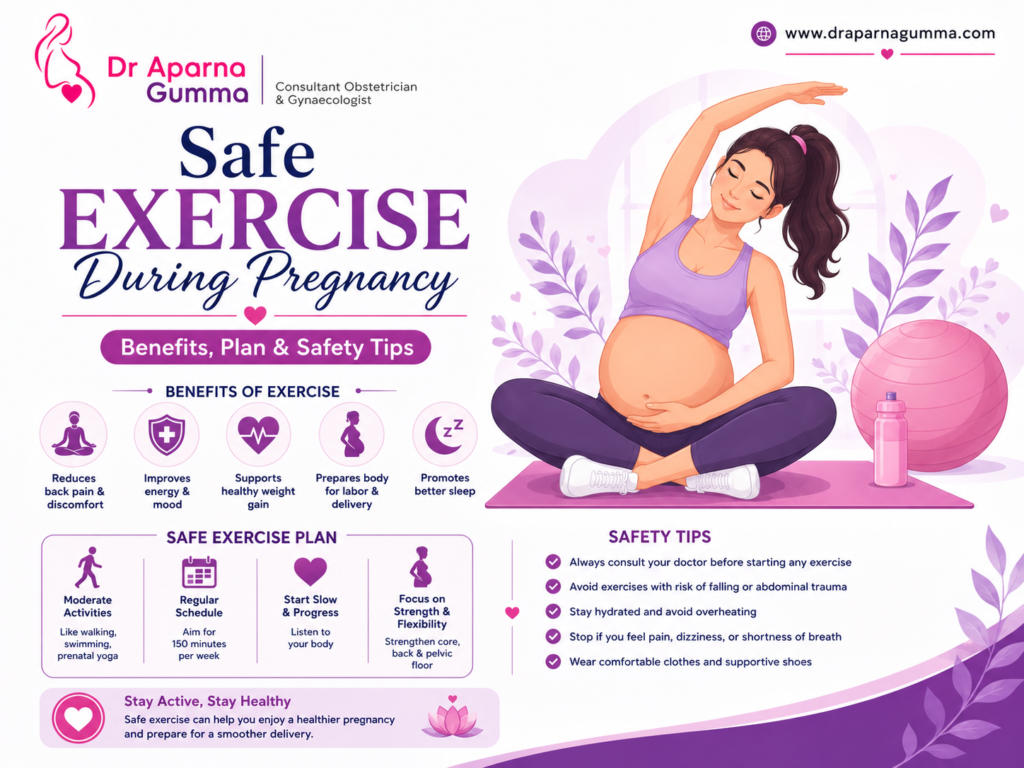
Research and clinical guidance indicate that regular physical activity can help:

  • Reduce back pain and muscle stiffness
  • Improve circulation and reduce swelling
  • Support healthy weight gain
  • Improve sleep quality
  • Boost mood and energy levels
  • Prepare muscles for labour and delivery

Many women also find that staying active improves recovery after childbirth.

Benefits of exercise during pregnancy

Exercise during pregnancy offers advantages that extend well beyond simply staying fit. Exercise helps maintain a healthy heart, builds up proper body posture, and strengthens muscles needed for labour.

Key benefits include:

  • Improved stamina and endurance
  • Reduced risk of gestational diabetes in some cases
  • Better posture and reduced lower back strain
  • Improved pelvic floor strength
  • Reduced anxiety and improved emotional well-being

Even light activities such as walking can provide meaningful benefits when performed regularly.

What exercises are safe during pregnancy?

Many activities are considered safe workouts during pregnancy when performed with appropriate modifications.

Walking

Walking remains one of the simplest and most effective forms of exercise during pregnancy. It keeps the heart healthy without placing excessive strain on joints or ligaments. Brisk walking at a comfortable pace, while still holding a conversation, is often recommended throughout all three trimesters.

This is also why many women ask, is walking safe during pregnancy? and for most, the answer is yes.

Swimming and Water Aerobics

Swimming is particularly beneficial as pregnancy progresses. The buoyancy of water supports body weight, reduces pressure on the spine, and eases joint discomfort. Water-based movements also lower the risk of overheating, which is essential during pregnancy.

Gentle water aerobics classes designed for special pregnancy-related care improve muscle strength and blood circulation.

Prenatal Yoga

The prenatal yoga benefits extend beyond flexibility. Structured prenatal yoga classes focus on breathing techniques, posture awareness, gentle stretching, and relaxation. Common poses include:

  • Cat–Cow stretch
  • Side-lying relaxation poses
  • Seated forward stretches (modified)

These poses are explicitly adapted to avoid pressure on the abdomen and excessive twisting.

Pelvic Floor Exercises (Kegels)

Pelvic floor strengthening is an essential but often overlooked part of a pregnancy fitness plan. Kegel exercises help support the bladder, uterus, and bowel, and may reduce urinary leakage during and after pregnancy.

It involves contracting and relaxing the pelvic muscles used to stop urine flow and can be done safely throughout pregnancy.

Strength Training While Pregnant (Light and Controlled)

Strength training while pregnant can be beneficial when performed with lighter weights and proper technique. Examples include:

  • Bodyweight squats (with support if needed)
  • Wall push-ups
  • Seated resistance band rows
  • Modified lunges

Activities that minimise the risk of falling or abdominal impact are generally recommended.

Pregnancy workout plan for beginners

If you were not physically active before pregnancy, starting slowly is essential. A beginner’s beginner-friendly simple pregnancy workout plan includes:

  • 20–30 minutes of moderate activity most days
  • Gentle stretching
  • Pelvic floor exercises
  • Light strengthening exercises

Many experts suggest that most healthy pregnant women can aim for around 150 minutes of moderate activity per week, depending on individual medical advice.

Safe exercise during pregnancy by trimester

Different stages of pregnancy require minor adjustments. The table below offers a general pregnancy exercise guide.

Trimester

Suitable Activities

Special Considerations

First Trimester

Walking, prenatal yoga, light stretching

Focus on hydration and avoid overheating

Second Trimester

Swimming, low-impact aerobics, and strength exercises

Avoid lying flat on your back for long periods

Third Trimester

Gentle stretching, walking, pelvic floor work, third-trimester safe exercises

Prioritise balance and comfort

Each pregnancy is different, and your healthcare provider may recommend modifications based on individual health conditions.

Pregnancy workouts first trimester: what to expect

During early pregnancy, fatigue and nausea are common. Many women benefit from shorter sessions of pregnancy workouts in the first trimester, such as walking, breathing exercises, and gentle stretching. The focus should be on consistency rather than intensity.

Exercises to avoid during pregnancy

Understanding exercises to avoid during pregnancy is just as important as knowing what is safe.

Activities usually discouraged include:

  • Contact sports
  • Activities with high fall risk
  • Heavy weightlifting without supervision
  • Scuba diving
  • Avoid exercises that require lying flat on the back for prolonged periods after mid-pregnancy

These activities may increase the risk of injury or reduced blood flow.

How often should you exercise when pregnant?

A common question is how often you should exercise when pregnant. Most women benefit from moderate exercise on most days of the week, provided there are no medical restrictions.

Short, regular sessions are generally more beneficial than occasional intense workouts.

Is walking safe during pregnancy?

Yes, is walking safely during pregnancy is one of the most frequently asked questions. Walking is considered one of the safest and most accessible forms of activity. It improves circulation, supports heart health, and is easy to adjust as pregnancy progresses.

Signs that you should stop exercising

Knowing when to stop exercising during pregnancy is essential for safety. Stop your workout and speak to your healthcare provider.

  • Dizziness or faintness
  • Vaginal bleeding
  • Severe shortness of breath
  • Chest pain
  • Persistent contractions
  • Reduced foetal movement

These symptoms require prompt medical evaluation.

Creating a practical pregnancy fitness plan

A realistic pregnancy fitness plan should include:

  • Warm-up and cool-down periods
  • Hydration before and after activity
  • Comfortable clothing and supportive footwear
  • Gradual progression rather than sudden increases in intensity

Listening to your body is essential. Fatigue and breathlessness should guide your pace.

Practical safety tips for safe exercise during pregnancy

To ensure safe exercise during pregnancy, keep these guidelines in mind:

  • Avoid overheating and drink plenty of fluids
  • Exercise in well-ventilated environments
  • Maintain good posture
  • Avoid sudden direction changes
  • Stop if you feel unwell

Moderation and consistency are the key points while practicing safe exercises during pregnancy.

Staying active safely during pregnancy

Regular, safe exercise during pregnancy can improve physical comfort, emotional well-being, and preparation for childbirth. When, with utmost care and under the expert guidance of the doctors, exercises become an essential part of prenatal care.

Every pregnancy is unique, so it is always advisable to discuss your pregnancy workout plan for beginners or any fitness routine with your healthcare provider. With the right approach, maintaining an active lifestyle can enhance confidence and the overall journey ahead.  

Why Choose Dr. Aparna Gumma

Dr. Aparna Gumma offers personalised, evidence-based maternity care with a strong focus on safety, comfort, and clear communication. She understands that every pregnancy is unique and takes time to guide patients through practical decisions, including safe exercise during pregnancy,  with reassurance and clinical clarity. 

Book a consulation today. 

About Dr Aparna

Dr Aparna Devi Gumma, female gynaecologist in Dubai, is one of the most trusted partners in women’s health with over 28 years of expertise as an Ob-Gyn and Advanced Gynecologic Laparoscopic Surgeon.

Related Blogs

How to manage stress and anxiety during pregnancy

How to manage stress and anxiety during pregnancy?

How to manage stress and anxiety during pregnancy? Pregnancy is often described as a joyful journey, but for many women, it also brings emotional challenges that are difficult to ignore. Understanding what causes anxiety during pregnancy is essential, as these feelings are more common than many expect. Hormonal changes, physical discomfort,

Read More »
Safe exercise during pregnancy

Safe exercise during pregnancy: benefits, plan & safety tips

Safe exercise during pregnancy: benefits, plan & safety tips Pregnancy brings many physical and emotional changes, and it is natural to wonder what activities remain safe during this time. One of the most common concerns expectant mothers have is whether exercise is beneficial or risky. In reality, safe exercise during

Read More »
why does pcos cause weight gain

PCOS Weight Gain: Causes, Symptoms & How to Stop It

PCOS Weight Gain: Causes, Symptoms & How to Stop It Weight changes can be frustrating, especially when they seem to happen without an apparent reason. Many women living with PCOS notice that their weight increases easily and is harder to reduce, even with careful eating and regular exercise. PCOS weight

Read More »
hormonal imbalance symptoms

Hormonal Imbalance: Symptoms, Causes & Treatment

Hormonal Imbalance: Symptoms, Causes & Treatment Do you feel like something isn’t quite right with your body or emotions lately? One day you’re exhausted despite a full night’s sleep; the next, your mood swings like a pendulum, or your skin breaks out unexpectedly. If this sounds familiar, you aren’t alone.

Read More »

Book An Appointment